Trees - Top View: A Practical Guide for Landscape Design
Trees - Top View refers to a visual representation of trees as seen from above, typically used in landscape design and urban planning. This perspective is valuable for understanding spatial relationships, planning green spaces, and integrating natural elements into built environments. Whether you're designing a residential garden, a public park, or a commercial property, the top view of trees can provide critical insights that influence the overall layout and aesthetics.
Understanding Trees - Top View
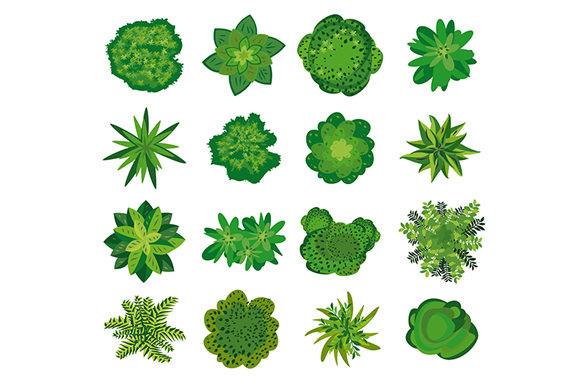
The top view of a tree captures its canopy shape, size, and spread. It is often depicted in architectural drawings, site plans, and landscaping blueprints. This view helps professionals visualize how trees will occupy space and interact with other elements like buildings, walkways, and structures.
What makes Trees - Top View distinct? Unlike side or front views, the top view focuses on the horizontal footprint of a tree. This allows designers to assess potential conflicts with overhead utilities, building facades, or pedestrian pathways. It also helps in determining the number and placement of trees needed to achieve desired shade, privacy, or aesthetic effects.
Comparing Trees - Top View with Other Tree Representations
While the top view is a powerful tool, it's important to compare it with other common representations such as side views, 3D models, and aerial photographs. Each has its own advantages and limitations:
- Side View: Shows the height and form of a tree but doesn't convey its width or spread.
- 3D Models: Provide a more realistic and immersive view but may be complex to integrate into traditional design documents.
- Aerial Photographs: Offer real-world context but lack the precision of a top view drawing.
Trees - Top View strikes a balance between simplicity and accuracy. It’s easy to interpret, scalable for different project sizes, and compatible with various design software and tools. However, it should be used in conjunction with other perspectives to get a full picture of a tree's impact on the landscape.
Strengths of Trees - Top View in Landscape Design
One of the key strengths of using the top view is its ability to simplify complex spatial arrangements. Here are some scenarios where it shines:
- Urban Planning: When designing city parks or plazas, the top view helps planners determine how many trees can be planted without overcrowding or obstructing infrastructure.
- Residential Landscaping: Homeowners can use top views to plan backyard layouts, ensuring trees don’t interfere with driveways, patios, or utility lines.
- Commercial Developments: Developers can use top views to create visually appealing yet functional outdoor spaces, balancing aesthetics with practicality.
Another advantage is the ease of scaling. A single top view can represent multiple trees, making it ideal for large-scale projects. Additionally, this view allows for quick adjustments and revisions during the design phase, which is crucial for meeting client expectations and regulatory requirements.
Tradeoffs and Limitations
Despite its benefits, Trees - Top View has certain limitations that should be considered:
- Lack of Depth: The top view does not show the vertical dimension of a tree, which can be important for assessing visibility, wind resistance, or structural integrity.
- Interpretation Challenges: Depending on the scale and detail, the top view may not always clearly indicate the species or specific characteristics of a tree.
- Design Constraints: In some cases, relying solely on top views might lead to oversights in terms of how trees interact with their surroundings when viewed from other angles.
To mitigate these tradeoffs, it's recommended to combine top views with other forms of representation. For instance, pairing a top view with a side profile can give a more complete understanding of a tree's presence in the landscape.
When to Use Trees - Top View
Trees - Top View is particularly useful in the following situations:
- Site Analysis: During initial assessments, top views help identify existing vegetation and its impact on proposed developments.
- Conceptual Design: Early-stage designs benefit from top views to explore different planting schemes and spatial configurations.
- Client Presentations: Clients often find top views easier to understand, making them an effective tool for communicating design ideas.
However, if your project involves intricate details like root systems, soil conditions, or specific tree species, additional data and visuals may be necessary. In such cases, consulting with a landscape architect or arborist can ensure that all aspects are properly addressed.
Alternatives and Considerations
While Trees - Top View is a reliable method, there are alternative approaches worth considering depending on the project's needs:
- Digital Modeling Tools: Software like AutoCAD, SketchUp, or GIS mapping can generate detailed 3D renderings that include both top and side views.
- Photorealistic Renderings: These images offer a highly realistic depiction of trees in their environment, though they require more time and resources to produce.
- Field Surveys: On-site evaluations can provide accurate data about tree health, growth patterns, and environmental factors that aren't visible in top views.
Each alternative has its own set of pros and cons. Digital modeling offers greater flexibility and realism, while field surveys provide firsthand data. Ultimately, the choice depends on the complexity of the project, available resources, and the level of detail required.
Practical Examples
Consider a scenario where a developer is planning a new residential community. Using Trees - Top View, the design team can quickly determine the optimal spacing between trees to avoid overcrowding and ensure adequate sunlight reaches homes. They can also visualize how mature trees will look in relation to buildings and communal areas.
In contrast, a botanical garden might opt for photorealistic renderings to showcase the diversity of plant life and create an immersive experience for visitors. While this approach provides stunning visuals, it may not be as practical for initial planning stages compared to top views.
Another example is a university campus undergoing expansion. By incorporating top views into their master plan, planners can efficiently allocate space for new facilities while preserving existing greenery. This ensures that development remains sustainable and harmonious with the natural environment.
Conclusion
Trees - Top View is a versatile and effective tool in landscape design, offering clarity and precision when planning green spaces. It simplifies complex spatial arrangements and enables informed decision-making. However, it should be used alongside other methods to ensure comprehensive planning and execution.
Whether you're a professional designer or a homeowner looking to enhance your outdoor space, understanding the role of Trees - Top View can significantly improve your design outcomes. By evaluating its strengths, limitations, and alternatives, you can choose the most suitable approach for your specific needs and goals.